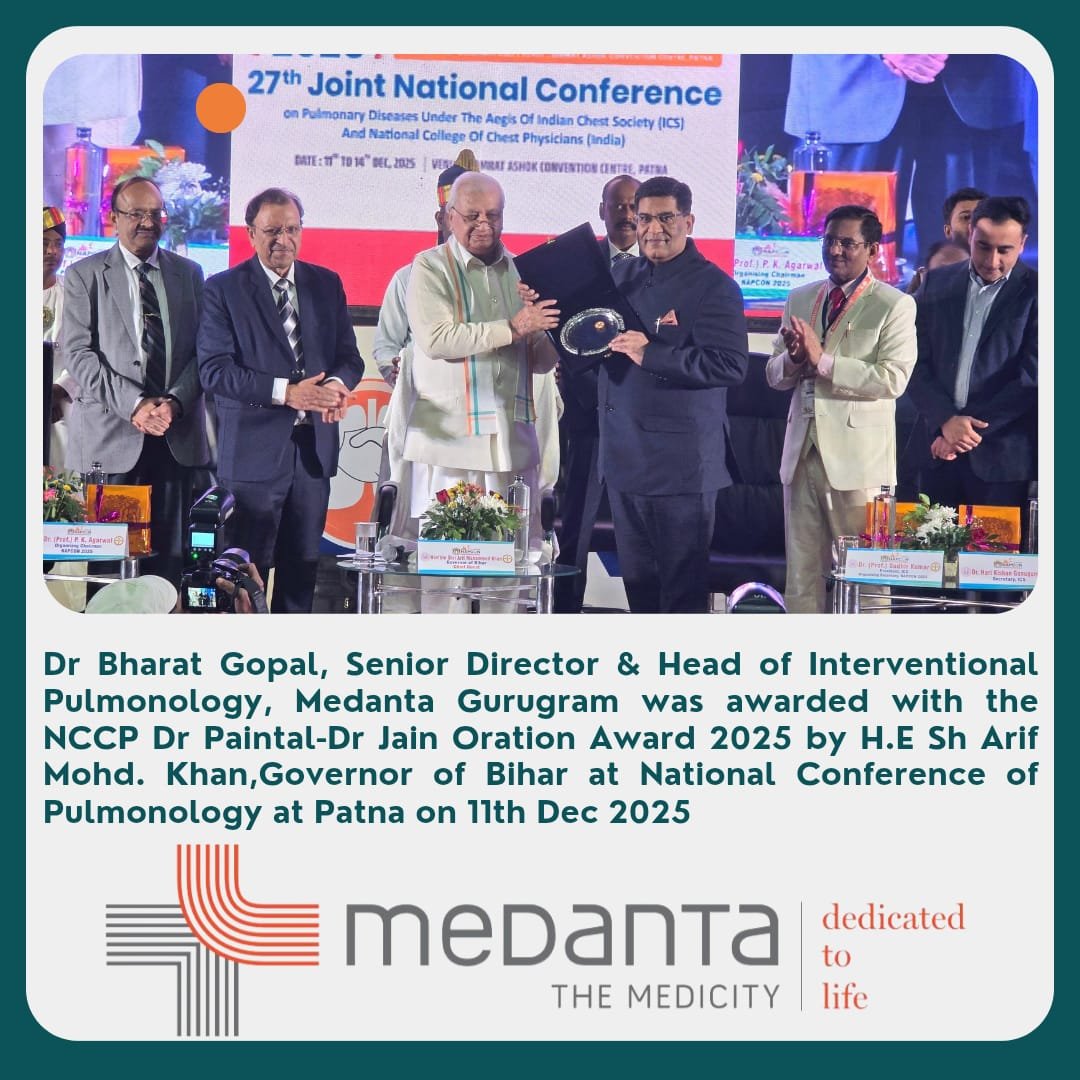
Dr. Bharat Gopal Honoured with NCCP Dr. Paintal-Dr. Jain Oration Award 2025 at National Pulmonology Conference
Patna, December 2025:
Dr. Bharat Gopal, Senior Director and Head of Interventional Pulmonology at Medanta -The Medicity, Gurugram (NCR), was honoured with the prestigious NCCP Dr. Paintal-Dr. Jain Oration Award 2025 at the National Pulmonology Conference held in Patna.
The award was presented by His Excellency Sh. Arif Mohammad Khan, Hon’ble Governor of Bihar, recognising Dr. Gopal’s significant contributions to respiratory medicine, interventional pulmonology, and national public health initiatives.
As part of the award, Dr. Gopal delivered the oration titled “India’s Air Quality Crisis: The Pulmonologist’s Responsibility in a Changing Climate.”
His address focused on the growing impact of air pollution on respiratory health and the evolving role of pulmonologists in driving clinical excellence, community awareness, and policy advocacy to safeguard public health.
Speaking on the occasion, Dr. Gopal said, “I am deeply honored to receive this distinguished recognition. I extend my sincere gratitude to my colleagues, mentors, and students whose unwavering support inspires me every day. Such honours strengthen my commitment to improving respiratory health nationwide.”

He has also been conferred with the Hon Fellowship of Indian Chest Society, Published a chapter in the Compendium of Respiratory Medicine during the same Conference
Dr. Gopal continues to be a leading voice in advancing respiratory care through innovation, research, and public health leadership.
COPD Tips From Experts
In an exclusive story with Moneycontrol(Online), Dr. Bharat Gopal, Senior Director, Respiratory & Sleep Medicine at Medanta, Gurugram explains that COPD is serious but manageable. He urges patients to drop the guilt often associated with it—COPD is not just caused by smoking; pollution, urbanisation, indoor biomass fuel and workplace dust are major contributors. Dr. Gopal says inhalers, pulmonary rehabilitation and regular check-ups can greatly improve quality of life. He advises smaller, protein-rich meals, and recommends pursed-lip breathing as a powerful technique to relieve “air hunger” and calm anxiety.
4 Expert Tips to Stay Safe with Asthma in Polluted Cities
In an exclusive story with Hindustan Times(Online), Dr. Bharat Gopal, Senior Director, Respiratory & Sleep Medicine at Medanta, Gurugram shares four practical tips to help asthma patients live more safely in polluted cities. First, he advises checking the AQI daily and avoiding outdoor activities on “Poor” (> 200) or “Severe” (> 400) pollution days. Second, he recommends creating a “safe-air sanctuary” at home, using a HEPA air purifier in bedrooms and living areas. Third, he cautions against strenuous exercise outdoors during high pollution and suggests rescheduling errands. Finally, he warns to head to the ER if symptoms worsen, such as increased breathlessness or extreme coughing.
Living Well With COPD: Expert Advice for a Better Life
In an exclusive story with Moneycontrol(Online), Dr. Bharat Gopal, Senior Director, Respiratory & Sleep Medicine at Medanta, Gurugram explains that COPD is serious but manageable. He urges patients to drop the guilt often associated with it—COPD is not just caused by smoking; pollution, urbanisation, indoor biomass fuel and workplace dust are major contributors. Dr. Gopal says inhalers, pulmonary rehabilitation and regular check-ups can greatly improve quality of life. He advises smaller, protein-rich meals, and recommends pursed-lip breathing as a powerful technique to relieve “air hunger” and calm anxiety.
Long-Term Pollution in Gurugram: Health Risks Sound Alarm
Dr. Bharat Gopal warns that long-term exposure to polluted air can slowly damage the lungs, worsen respiratory issues, and harm overall health. He urges people to stay alert, monitor air quality, and take simple preventive steps to protect themselves from the lasting impact of toxic air.
No Data on Deaths from Air Pollution? Experts ‘Fact Check’ Centre’s Claims
Experts have pushed back against the Centre’s claim that there is no data linking air pollution to deaths, calling it misleading and incomplete. During a response in Parliament, the government stated that deaths cannot be directly attributed to air pollution due to the absence of specific records. However, public health experts argue that this ignores a large body of scientific evidence from India and global institutions. Numerous studies have consistently shown that prolonged exposure to polluted air significantly increases the risk of respiratory diseases, heart attacks, strokes, lung cancer, and premature death. Experts explain that while death certificates may not list air pollution as a single cause, it acts as a major contributing factor that worsens existing conditions and accelerates mortality. They stress that dismissing this link undermines public awareness and delays urgent action. Recognising air pollution as a serious health threat is crucial for shaping stronger policies, improving air quality standards, and protecting vulnerable populations such as children, the elderly, and those with chronic illnesses.