
Lung Cryobiopsy in Gurugram: Procedure, Benefits, Risks & Clinical Indications
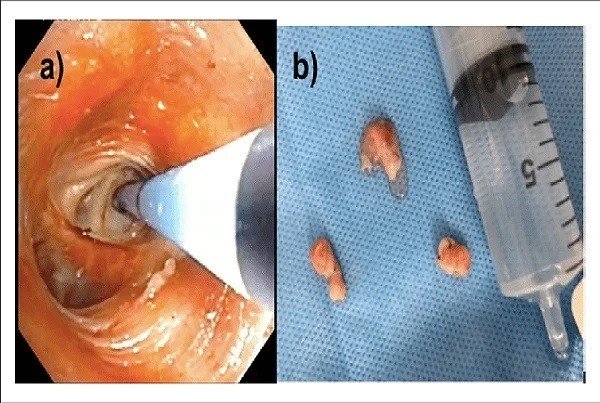
Lung Cryobiopsy in Gurugram is a minimally invasive diagnostic procedure used to obtain larger, high-quality lung tissue samples through bronchoscopy. It can be considered when imaging, blood tests, bronchoscopy, or other investigations do not provide a sufficiently clear diagnosis. The procedure uses a small cryoprobe to freeze and retrieve tissue from the lung for detailed pathological examination.
For fast information, chat directly with us on WhatsApp.
What Is a Lung Cryobiopsy?
A lung cryobiopsy is a bronchoscopic biopsy technique in which a cryoprobe is introduced through the airways to a selected area of the lung. The probe briefly freezes the surrounding tissue, allowing the physician to retrieve a relatively larger specimen compared with conventional forceps biopsy.
The tissue is then examined by a pathologist. The findings are interpreted along with the patient’s symptoms, high-resolution CT findings, laboratory results, and clinical history.
Transbronchial lung cryobiopsy has become particularly relevant in the evaluation of selected interstitial lung diseases because it can provide larger and better-preserved tissue samples.
When Is Lung Cryobiopsy Recommended?
The decision to perform Lung Cryobiopsy in Gurugram depends on the suspected condition and whether a tissue diagnosis is clinically necessary. It is not required for every patient with a lung abnormality.
It may be considered when:
- The diagnosis remains uncertain after non-invasive investigations.
- Imaging shows an interstitial or diffuse lung disease pattern that requires histological confirmation.
- Conventional bronchoscopic sampling may not provide adequate tissue.
- A larger tissue specimen may improve diagnostic confidence.
- A multidisciplinary team believes that tissue diagnosis could influence treatment planning.
Conditions such as interstitial lung diseases may require careful integration of clinical, radiological, and pathological findings. Current guidance emphasizes appropriate patient selection rather than performing lung biopsy routinely.
How Is Lung Cryobiopsy Performed?
Before the procedure, the patient undergoes a detailed clinical assessment. Imaging studies such as high-resolution CT may be reviewed to determine the most appropriate biopsy site.
During the procedure, a bronchoscope is guided through the airway. The cryoprobe is advanced toward the selected area under appropriate imaging and procedural guidance. The probe is activated for a controlled period to freeze the target tissue. The frozen specimen is then retrieved and sent for histopathological examination.
Bleeding control is an important part of the procedure. In appropriate settings, techniques such as bronchial blockers may be used to help manage bleeding. Post-procedure monitoring and imaging can also be required to identify complications such as pneumothorax.
Benefits of Lung Cryobiopsy in Gurugram
One of the main advantages of Lung Cryobiopsy in Gurugram is the ability to obtain a larger tissue specimen while avoiding surgical lung biopsy in selected patients.
Potential benefits include:
- Larger tissue samples than conventional forceps biopsy
- Better preservation of tissue architecture
- Minimally invasive bronchoscopic approach
- Useful information for selected interstitial lung diseases
- Potentially higher diagnostic yield in certain clinical situations
Recent evidence also suggests that cryobiopsy can improve histology-based diagnostic yield for selected peripheral pulmonary lesions, although the risk of bleeding and pneumothorax must be considered.
Risks and Possible Complications
Although Lung Cryobiopsy is minimally invasive, it is not completely risk-free. The most important complications include bleeding and pneumothorax.
Other possible complications may include:
- Cough or throat discomfort
- Temporary oxygen desaturation
- Infection
- Respiratory complications
- Significant bleeding in uncommon cases
- Pneumothorax requiring treatment in some patients
The likelihood of complications depends on factors such as the patient’s lung function, pulmonary vascular status, underlying disease, biopsy location, and procedural technique. Recent consensus guidance highlights the importance of appropriate expertise, airway management, bleeding control, and careful patient selection.
Who May Not Be a Suitable Candidate?
Lung cryobiopsy is not appropriate for everyone. Patients with severely impaired lung function, significant pulmonary hypertension, major cardiovascular problems, severe bleeding disorders, or unstable medical conditions may have increased procedural risk.
A specialist should therefore evaluate the potential diagnostic benefit against the patient’s individual risk before recommending the procedure. In selected cases, other diagnostic methods may be safer or more appropriate.
Why Specialist Evaluation Matters
Choosing the right biopsy technique requires more than simply identifying an abnormal area on a scan. The patient’s clinical history, HRCT pattern, pulmonary function, suspected diagnosis, and available alternatives should all be considered.
For patients considering Lung Cryobiopsy in Gurugram, specialist evaluation can help determine whether cryobiopsy is appropriate and whether the expected diagnostic information is likely to change management.
Conclusion
Lung Cryobiopsy in Gurugram is an advanced bronchoscopic technique that can provide valuable lung tissue for diagnosis in carefully selected patients. Its ability to obtain larger, well-preserved specimens can be useful when conventional investigations do not establish a definitive diagnosis.
However, the procedure should be recommended only after evaluating its potential benefits, risks, and alternatives. Careful patient selection, appropriate procedural expertise, bleeding control, and post-procedure monitoring are essential for safe and effective lung cryobiopsy.
Frequently Asked Questions
1. Is lung cryobiopsy a surgical procedure?
No. It is generally performed through bronchoscopy and is less invasive than surgical lung biopsy, although it still carries procedural risks.
2. Why is lung cryobiopsy performed?
It is performed when obtaining lung tissue may help establish a diagnosis that cannot be confirmed adequately through imaging, laboratory tests, or conventional bronchoscopic techniques.
3. What are the main risks of lung cryobiopsy?
Bleeding and pneumothorax are the major complications. The individual risk varies according to the patient’s condition and the procedure.
4. How is the biopsy sample examined?
The retrieved tissue is sent to a pathology laboratory, where it is examined microscopically and interpreted alongside clinical and radiological findings.
5. Is lung cryobiopsy suitable for every patient?
No. Patient selection is important. A specialist should assess lung function, imaging findings, medical conditions, and alternative diagnostic options before recommending the procedure.
For more details or to book an appointment, visit their official website: https://delhichestspecialist.com/.